
Sustainable Funding
TIA funding was built into Texas state law as part of House Bill 3 during the 86th Texas Legislature. It is a Tier 1 allotment through the Foundation School Program (FSP), the system through which the state provides funding to districts. This system, grounded in the Texas Education Code, creates a sustainable funding source for districts implementing TIA. Unlike previous state incentive programs, there is no cap on TIA allotment funds or the number of teachers who may earn a designation.
Learn More About Where Funds Go
How Allotments are Calculated
The allotment formula is based on the teacher designation level and the campus average student point value. The formula is tied to student level data and changes yearly.
ALLOTMENT = Base + (Multiplier x Average Student Point Value)
Teacher designations each have a base allotment amount. For example, a teacher with an Exemplary designation will at minimum earn the $6,000 base allotment for their district. Each designation level also has a multiplier rate that, when multiplied by the campus average student point value will increase the allotment generated per designation level.

Campus Average Student Point Value
The campus average student point value is calculated from a campus’ socioeconomic level and rural status.
Campus Socioeconomic Level
Students are assigned a socioeconomic tier value based on the census block group in which the student resides. Every student is given a point value based on the tier they are in.
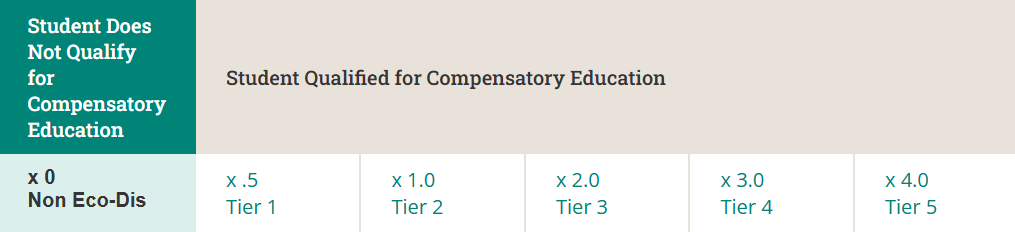
Student’s socioeconomic tiers are calculated from the State Compensatory Education (SCE) program. SCE provides funding to reduce disparity in performance on assessment instruments or disparity in the rates of high school completion between educationally disadvantaged students, at-risk students, and all other students.
Campus Rural Status
Students at a campus defined as rural receive a two-tier boost with a maximum value of Tier 5. This may increase the student point value assigned per student.
An average student point value for each campus is calculated by adding all student tier numbers and then dividing by the total number of students. The average point value is then multiplied by the designation’s multiplier rate. That value is added to the designation’s base allotment, giving the total campus allotment value per teacher.
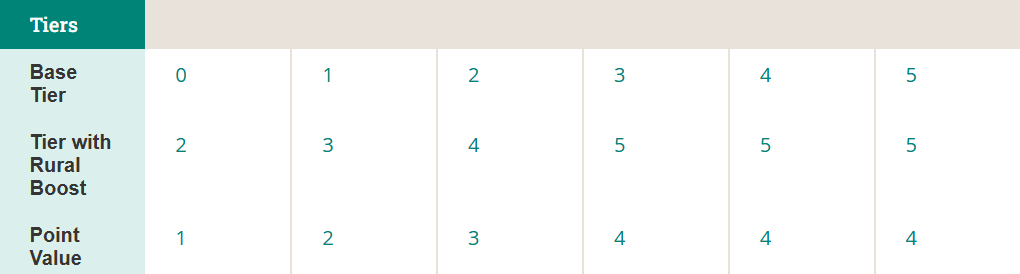
Calculating Campus Allotment Values
Designation allotment amounts will vary per campus based on their student population and the campus’ rural status. After the point values are assigned to each student, an average point value is calculated for each campus by adding all student point value numbers within the campus and then dividing by the total number of students.
The campus’ average student point value is multiplied by the designation’s multiplier rate. That value is added to the designation’s base allotment, resulting in the total incentive allotment per designation on that campus.
Since the allotment value of each designation is based on student population, allotment values are recalculated annually in April. Districts may see an increase or decrease in campus allotment values due to student population changes from year to year. Changes in allotment payouts typically stay within a 5% margin of change. Campuses that see a larger margin of decrease in their allotment payouts are those that experience a change in their rurality status (which increases the allotment value).
Funding FAQ
Districts must spend at least 90% of the allotment on teacher compensation on the campus of the designated teacher, while up to 10% can be used to support the local designation system.
Within these parameters, districts may choose to split the allotment funding in several ways. Some districts choose to give the full 100% of funding to their designated teachers. Other districts choose to split the funding to reward other eligible educators who contribute to student success, such as instructional paraprofessionals.
Districts may use funds from the 10% to provide additional professional development opportunities to designated teachers and teachers who may be eligible for designation in the future.
Learn more about how districts are allowed to use the allotted funds.
Districts need a plan for teachers who resign prior to the scheduled payout date. Some districts may choose to forward the full or remaining payment to the designated teacher. Other districts may choose to use the funds to compensate teachers who remain on the campus. All funds must be spent by August 31.
Funding for teachers designated as Recognized, Exemplary, and Master under TIA are awarded to districts, which in turn must spend at least 90% of the funds on teacher compensation on the campuses where the designated teachers work.
TEC Section 48.112 (i)(1)(A): A district shall annually certify that funds received under this section were used as follows: At least 90% of each allotment received was used for the compensation of teachers employed at the campus at which the teacher for whom the district received the allotment is employed.
There are no PIC codes for TIA funds. Funding and reimbursement of fees are a separate line item in FSP payments.
Yes. Districts that employ teachers who have earned designations will receive funding for those teachers based on the TIA formula, even if the district does not have an approved designation system in place.
For example, a district that does not have a designation system in place could employ a teacher that earned a designation in another district or a teacher who automatically earned a Recognized designation for having achieved National Board Certification. Districts need to develop a plan for how to spend allotment dollars that they receive, in accordance with the statutory requirements.
Yes. Given that a school’s student enrollment changes yearly, the campus’ socioeconomic tier is recalculated annually. As a reminder, this calculation uses the home addresses of students who attend a particular campus. Allotment funds for each designated teacher are based on the campus, and not the individual students assigned to the designated teacher.
While designations are tied to the teacher and not their employing district or campus, allotment funds are awarded to the district where the teacher was employed as of the last Friday in February. For teachers who meet eligibility criteria, the district employing the teacher as of the last Friday in February will receive funds for that school year and must spend the allotment funds by August 31. The percentage of allotment awarded to the designated teacher varies by district. Districts are not required to forward funds if the teacher resigns or retires before August 31. If a designated teacher moves to a new district or campus between school years, the allotment for the next school year will be recalculated in April based on the new campus’ rural status and level of socioeconomic need.

Program information from Region 5, checked September 7, 2026. View the official source page.